Teaomancy or Tea Leaf Divination
Teaomancy
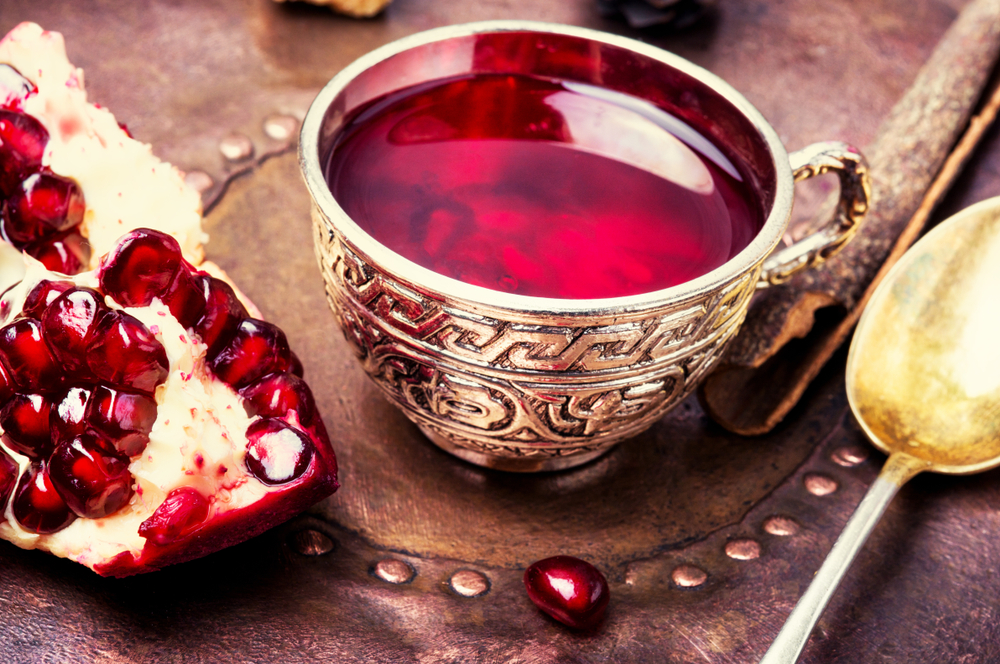
Teaomancy is a form of divination linked to tasseomancy (or tasseography): the art of interpreting signs and shapes that appear in a cup or a similar vessel. It is based on a simple principle: when the mind becomes calm, the symbol reveals itself — and the symbol speaks.
1) Origins and lineage
Teaomancy belongs to the great family of cup divination arts. Historically, tea-leaf reading is often linked to Asian traditions: it is said that the ancient Chinese associated the study of tea with omens, and that the shape of certain cups — especially handleless ones — was compared to that of a bell, encouraging observation of the signs forming at the bottom.
In Antiquity, other cultures developed related practices: in Greece, certain divinatory rites were known as kottavos; in Rome, omens were sometimes read in the lees of wine. Like any living tradition, teaomancy is passed down from generation to generation and takes different forms depending on regions, families, and the sensitivity of the person who reads.
2) What is truly being read
The cup is not a “magical object” in a naïve sense: it becomes a support. The shapes in the leaves (or in the powder) work like a symbolic language. According to esoteric tradition, these symbols belong to archetypal energies: they already exist within the collective field — sometimes called the Akashic field — and manifest as images when the conditions are right.
- The person drinks: their energetic signature is symbolically “deposited” in the cup.
- The residues draw shapes: they are mirrors of past, present, or future tendencies.
- Reading is based on symbols, but also on zones (rim, center, bottom).
- The final meaning is built through context: intention, question, emotional state, life moment.
3) Why calm is essential
Like coffee divination, teaomancy requires concentration, silence, and intuition. The reader ideally enters a more receptive state of consciousness — often called a “light trance.” Brainwave frequency varies in response to changes in mental activity level; psychology describes this as an altered state (psychologist Charles Tart helped popularize this notion and describe these temporary changes in the waking state of consciousness).
- Slow breathing, a more “spacious” mind.
- Less judgment, more observation.
- Spontaneous images/sensations, not forced.
- Ability to link symbol + context.
- Stress, agitation, extreme fatigue.
- The desire to “force” an outcome.
- A poorly framed or overly broad question.
- Overly intense emotional attachment.
4) Whole leaves or powder: two different readings
Tea divination is generally practiced in two ways: with whole tea leaves or with a finer form (powder / dust). Both methods can capture a person’s energetic signature; the difference lies mainly in the level of detail and the fineness of the patterns.
- Whole leaves: a broader reading — major events, key life themes, significant changes.
- Powder / fine grains: a more precise reading — details of a situation, nuances, subtle timing, micro-signals.
5) A simple guide to reading a cup
Every tradition has its own rules. For a clear library reference, here is a teaching-oriented grid often used: zones + proximity + density.
- Rim / top of the cup: what arrives soon, what is “at the door,” the immediate atmosphere.
- Middle: current dynamics, necessary actions, tensions or openings.
- Bottom: root causes, depth, inherited patterns, fear/strength, slow destiny.
- Thick deposits: emotional charge, weight, resistance, a “knot” to untie.
- Fine traces: subtle signals, intuitions, gentler messages.
- Empty zones: pause, silence, protection, available space — or a question still “closed.”
6) Mini symbol lexicon (reference)
A symbol is never read “alone.” It is read through shape + zone + question. Here are library reference cues (non-exhaustive):
- Bird: news, message, travel, freedom.
- Heart: love, emotional healing, reconciliation.
- Ring / circle: commitment, alliance, pact, promise.
- Star: guidance, inspiration, luck, protection.
- Key: opening, solution, access, opportunity.
- Snake: transformation, shedding, healing, instinctive power.
- Mountain: challenge, ascent, perseverance, long-term goal.
- Tree: growth, roots, family, vitality.
- Road: choice, path, passage, change of direction.
- Cloud / mist: confusion, veil, secret, need for clarity.
Tip: if a symbol speaks strongly to you, write it down. Teaomancy becomes more reliable when you build your own symbolic dictionary over time.
7) Guided practice (library version)
- Intention: ask a simple question (e.g., “What energy dominates this situation?”).
- Silence: 1 minute of slow breathing — no screen, no distraction.
- Infusion: let the tea “work” — avoid rushing.
- Connection: drink consciously, as a ritual gesture.
- Observation: first look at the cup as a whole (general atmosphere).
- Reading: identify a maximum of 3 symbols (more = higher risk of inventing).
- Synthesis: connect symbols to the question — then write down 2 concrete actions.
Important: a library reading is an orientation and reflection tool. It is not intended to replace medical, legal, or financial advice.
8) Transmission, nuances, ethics
Teaomancy is never identical from one place to another. Cup-rotation techniques, infusion duration, the way a reading is “sealed,” or the symbolism of certain shapes vary greatly. That is precisely what makes it an art: tradition provides structure, intuition provides life.
- Humility: the symbol suggests; it does not impose.
- Responsibility: avoid catastrophic announcements and fixed prophecies.
- Clarity: choose guidance + concrete actions rather than fear.
- Consent: do not read “about someone” without permission.
Αυτή η ανάρτηση είναι επίσης διαθέσιμη σε:
 Français
  Ελληνικά


You May Also Like

Tarot Cards
March 6, 2026
Lychnomancy & Ceromancy — The Sacred Art of Flame and Wax Divination
December 25, 2025
