
Aromatherapy
The Healing Art of Aromatherapy
Aromatherapy is not simply a pleasant scent in a room. It is not only massage with essential oils. It is a subtle, deep and highly complex therapeutic approach, where essential oils are used with knowledge, measure, safety and personal adaptation, in order to support the human being on a physical, emotional, mental and energetic level.
Aromatherapy is not simply a “nice smell”
In many places, people still associate aromatherapy mainly with massage. This is understandable, because for years its most familiar application was what is commonly called “aromatherapy massage”. But this is only one small part of it. In reality, aromatherapy is a much broader system of natural, complementary and holistic care.
In its more serious form, as it is practised in many countries abroad, aromatherapy does not begin with the question “which scent do you like?” It begins with the question: what is happening within the person? Where is the pressure? What is held in the body? What is stored in the nervous system? What does the emotion need? What is the soul asking for?
What aromatherapy truly is
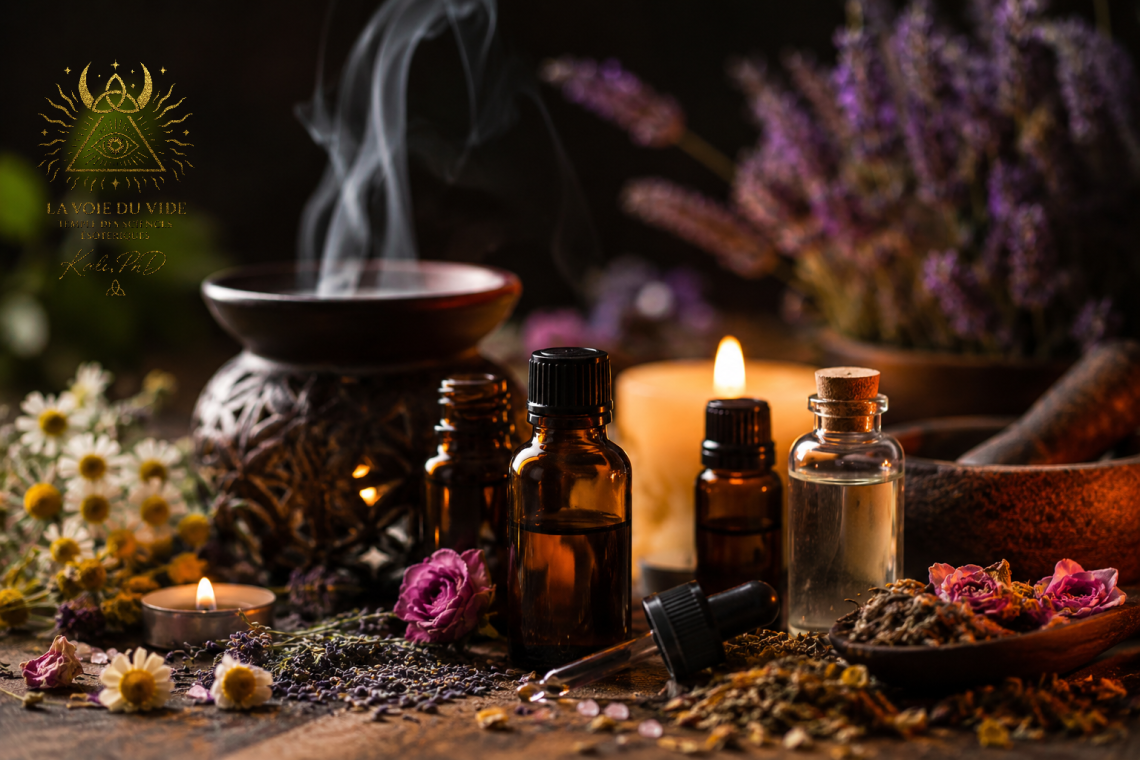
Aromatherapy is the therapeutic use of essential oils and aromatic plant extracts with the aim of supporting health, wellbeing and inner balance. Essential oils are volatile aromatic substances derived from plants: flowers, leaves, bark, roots, fruits, seeds, resins or woods.
They are not simply “smells”. They are concentrated plant signatures. Each essential oil has its own chemical profile, its own aromatic personality, its own effect on the body, the nervous system, mood and the inner state of the person.
Lavender, for example, is not simply “relaxing”. It may be connected with calm, sleep, release, relief of tension, emotional softening and a sense of safety. Frankincense is not simply “spiritual”. It may be connected with deeper breathing, inner concentration, the feeling of sacred space and a return to the inner axis.
Why essential oils act so deeply
Smell is one of the most ancient and immediate gateways of the human being. A scent can bypass logic and touch memory, emotion, instinct and the nervous system directly. This is why a smell can instantly take us back to a childhood memory, a person, a home, a period of life, a feeling of safety or an old pain.
This is one of the reasons aromatherapy can be so meaningful. It does not work only with the skin. It does not work only with the nose. It works with the bridge between body and soul. With memory. With breath. With mood. With tension. With the person’s sense of whether they inhabit themselves or not.
The difference between simple use and therapeutic use
It is one thing to place a few drops of lavender in a burner because it “smells nice”. It is another thing to create a personal therapeutic approach based on the person’s condition, needs, sensitivities, history and the purpose of the session.
In proper aromatherapeutic work, the same essential oil is not given to everyone. The same dosage is not used for everyone. The same blend is not chosen for anxiety, grief, exhaustion, insomnia, psychic tension, energetic depletion or the need for grounding. Every person has a different body, a different story and a different inner temperature.
This is why aromatherapy, when practised seriously, is personalised. The choice of essential oils is based on the person, not on a generic list saying “this oil is for this problem”.
How a complete aromatherapy session takes place
A serious aromatherapy session does not begin with massage. It begins with assessment. The practitioner needs to understand what is happening on several levels: the body, mood, sleep, energy, anxiety, emotional state, sensitivities, contraindications and the person’s way of life.
Elements that may be explored include:
- the main request of the session,
- the physical condition and any sensitivities,
- sleep quality, tension, fatigue or overstimulation,
- the emotional state and psychic burden,
- whether allergies, asthma, pregnancy or skin reactions are present,
- medication use or specific medical conditions,
- the scents the person instinctively loves or rejects,
- whether grounding, release, strengthening, comfort, cleansing or energetic support is needed.
After this assessment, one does not simply choose an oil. A direction is built. Aromatherapy may be applied through inhalation, an aromatic tool, a personal blend, body oil, bath salts, compress, space spray, aromatic ritual, combination with flower remedies, herbal support, crystal elixirs or another holistic practice, depending on what the person truly needs.
Assessment
Understanding the request, the body, the emotional state, sensitivities and contraindications.
Choice of direction
A scent is not simply selected. The therapeutic direction is defined: grounding, release, sleep, protection, comfort, toning or cleansing.
Personal protocol
A personalised plan is created with essential oils, herbs, aromas or other holistic supports, with a specific method of use.
Follow-up and adjustment
The work is adapted in each following session, according to the person’s response and inner progression.
Massage is not required
This is one of the most important points. Aromatherapy does not necessarily require massage. Massage is one method of application, not aromatherapy itself. A person can receive deep aromatherapeutic support without any body massage at all.
In many cases, the most appropriate form may be a personal aromatherapeutic protocol: specific essential oils for specific times of the day, specific practices for sleep, grounding, release or protection, aromatic support for the space, herbs for baths or herbal drinks when appropriate, flower remedies, crystal elixirs or crystals where needed.
The main methods of application
On what levels aromatherapy may support
Aromatherapy may work on several levels at once. It is not limited to relaxation. Depending on the essential oils, the blend, the method and the person, it may support the release of the nervous system, improvement of the sleep atmosphere, the sense of grounding, inner comfort, clearer breathing, concentration, mood, emotional resilience and energetic presence.
Every session is different
There is no single “aromatherapy recipe” for everyone. Two people may ask for help with anxiety, yet need entirely different aromatic approaches. One may need grounding. Another comfort. Another release. Another protection. Another sleep stabilisation. Another to feel alive again.
This is why each session may involve different essential oils, different herbs, different aromas, different bases, different methods of application and different duration of use. The work adapts to the real need of the person.
And this does not remain the same throughout the whole process. What a person needs in the first session may not be what they need in the second. At first, they may need calm and release. Then they may need sleep support. Later, emotional release. Later again, toning, protection, clarity, grounding or restoration of inner strength.
What someone truly receives after a session
What a person receives after an aromatherapy session is not simply an oil, a roll-on or an aromatic product. These may be only the external tools. The essence is much deeper: they receive a personal holistic aromatherapy protocol, designed around their own condition, body, nervous system, emotional burden and energetic need.
In other words, nothing generic is given. It is not “lavender for anxiety” or “orange for joy”. That is superficial use. In real aromatherapeutic work, the person receives specific direction: which essential oils are suitable for them, which should be avoided, when to use them, how to use them, how often, for how many days, and for what purpose.
Depending on the case, specific essential oils may be suggested for morning, daytime or evening use. Some oils may be used for grounding and stabilisation. Others for sleep. Others for cleansing the space. Others for emotional release. Others for meditation, protection, heart opening, emotional strengthening or return of inner presence.
In some cases, the protocol may include specific herbs for bath, foot bath or steam. In others, a gentle herbal infusion may be suggested, when appropriate and safe. A space spray may also be created or recommended, as well as a personal-use blend, a meditation composition, an aromatic practice before sleep or a combination of essential oils with flower remedies, crystal elixirs, crystals or other holistic support.
The important point is that every element has a reason. It is not chosen because it “smells nice”. It is chosen because it serves a specific therapeutic direction. If the person needs release, the composition moves toward release. If protection is needed, another direction is given. If grounding is needed, another. If emotional comfort is needed, another. If energy, opening, clarity or stabilisation is needed, the protocol adapts accordingly.
And because the person changes, the protocol changes too. What is needed in the first session may not be what is needed in the second. At first, the nervous system may need calming. Then sleep may need support. Later, emotional weight may need to be worked through. Later again, energy, confidence, protection or contact with the body may need strengthening.
This is why aromatherapy, when practised correctly, is not a static process. It is a path. In each session, the person’s state is reassessed and the work is adapted. Essential oils, herbs, flower remedies, crystals, elixirs or aromatic tools may change, because the person’s inner position also changes.
Aromatherapy as personal holistic guidance
Serious aromatherapeutic work is closer to mapping than to simply choosing a scent. The practitioner does not look only at the symptom. They look at the whole person: body, breath, sleep, tension, emotion, energy, environment, habits, sensitivities and the way the person responds to scents.
From this image, a therapeutic direction is created. It may be daily, for a few days or for a specific period. It may include morning use for tone and clarity, midday use for restoration and focus, evening use for release and sleep, or specific practices for days when the person feels tension, fear, exhaustion or energetic burden.
This gives aromatherapy an entirely different value. It is not “take this and use it”. It is: “this is your personal field at this moment, this is your need, this is the aromatic and plant support that suits you, and this is the way to use it correctly”.
This is why aromatherapy should not be treated as a simple list of “essential oil = result”. That logic is poor. Real work is more subtle. An oil may be excellent in one case and unsuitable in another. A scent may calm one person and disturb another. A blend may be ideal for the first phase of the healing path, but need adjustment once the person begins to shift internally.
In this way, the session becomes a living process. We listen to the body. We listen to the soul. We see what changes. We adapt the blend. We change the use. We deepen the work. And each time, aromatherapy follows the person where they truly are.
Aromatherapy, soul and memory
Scents have a special relationship with the soul. They do not speak through logical arguments. They speak through sensation. A scent can open space where a person has closed. It can soften where there is defence. It can bring tears where emotion has been suppressed. It can bring peace where there is inner tension.
This is why aromatherapy can be valuable for people who do not want yet another mental analysis. Sometimes a person has already thought too much. Spoken too much. Tried too hard to control everything with the mind. There, scent can work differently: more gently, more directly, more bodily, more quietly.
Aromatherapy and energetic work
Beyond its physical and emotional dimension, aromatherapy may also be used as energetic work. Each essential oil carries a particular quality. Some cleanse. Some ground. Some open the heart. Some bring courage. Some protect. Some help with prayer, intuition or sacred space.
In this approach, essential oils are not used only for the “symptom”. They are also used for the field. For the atmosphere around the person. For boundaries. For grounding. For release after contact with heavy energies. For return to the inner axis.
Correct dosage is part of the therapy
One of the greatest mistakes in the use of essential oils is excess. More drops do not mean more healing. Essential oils are concentrated substances. They require respect, dilution and proper use.
In aromatherapy, dosage is not a detail. It is a central part of therapeutic safety. A body oil requires one dilution. A roll-on another. A facial blend another. A blend for an elderly person another. One for sensitive skin another. One for someone with asthma, allergies, pregnancy or medication use another.
The natural origin of an essential oil does not mean it is automatically safe for everyone. Some oils may irritate the skin. Some are phototoxic when applied before sun exposure. Some are not suitable for pregnancy, children, sensitive people or specific conditions. This is why knowledge is essential.
Who this approach is suitable for
Holistic aromatherapy may suit people who feel they need gentle but meaningful support. People carrying anxiety, tension, fatigue, emotional weight, sleep difficulty, overstimulation, sensitivity, a sense of energetic burden or the need to create a clearer and more healing personal space.
It may also be especially useful for people who function too much from the mind and need a more bodily, sensory and immediate way of reconnecting. Scent does not require analysis. The body recognises it. The breath receives it. The soul often responds before the mind has time to explain.
Aromatherapy as holistic care
Aromatherapy can become a bridge between the material and the subtle. On one hand, it works with real plant substances, chemical components, dilution, safety and practical application. On the other hand, it touches memory, mood, emotion, energy and the personal atmosphere of the human being.
This is also why it can combine so well with other holistic approaches: flower remedies, herbal work, crystal elixirs, energetic cleansing, meditation, ritual work, sound, breath and personal self-care practices.
Aromatherapy does not come to replace medicine or psychotherapy. It offers another path of care: more subtle, more sensory, more personal, a path where body, soul and nature begin to speak to each other again.
The essence
Real aromatherapy is not a luxury. It is not a spa. It is not simply a pleasant experience. It is a serious, subtle and deeply human way of caring, where essential oils are used with knowledge to support what the person truly needs.
Sometimes a scent is needed to soften the soul. Sometimes a drop is needed to remind the body that it can relax. Sometimes a whole protocol is needed so the person can feel that there is space around them again. And sometimes, a correctly chosen aromatic work can become the beginning of a deeper return to the self.
Personal aromatherapy session
If you feel that you need a more subtle, natural and holistic form of support, a personal aromatherapy protocol can be created for you, based on your body, nervous system, emotions, energy and the request you bring.
The session is not simply about choosing a pleasant scent. It is about understanding what you truly need at this stage and creating targeted aromatic, herbal and holistic support that may change as you change.
Each person receives a different direction. Each blend has a reason. And each following session may lead deeper, according to the path, response and real needs that emerge.
Request personal guidance or an aromatherapy sessionLa Voie du Vide — Center of Occult Arts and Field Architecture
esoteric-sciences.com
Αυτή η ανάρτηση είναι επίσης διαθέσιμη σε:
 Français
  Ελληνικά


You May Also Like

Shamanic Healing
June 20, 2026
Numerology – The Secret Architecture of Life
June 23, 2026
